Inside Puppy Prison Programs
Did you know that most Freedom Service Dogs spend part of their puppyhood in prison?
Yes, you heard that right!
When people learn that FSD Service Dogs in training take their first big step toward becoming life-changing assistance dogs inside correctional facilities, we are often met with a look of surprise. But what you may not realize is that the training our puppies with a purpose receive from handlers who are incarcerated is an essential part of their working dog careers and a cornerstone of FSD’s success in placing highly-trained assistance dogs with people in need.
From Nursery to New Beginnings
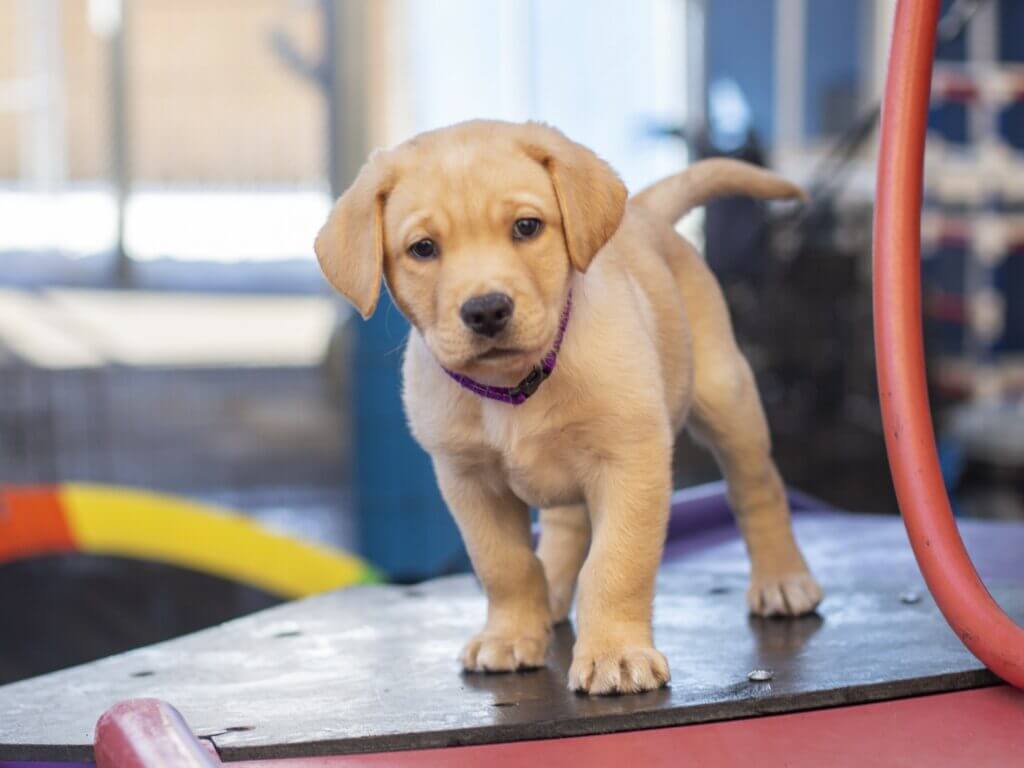
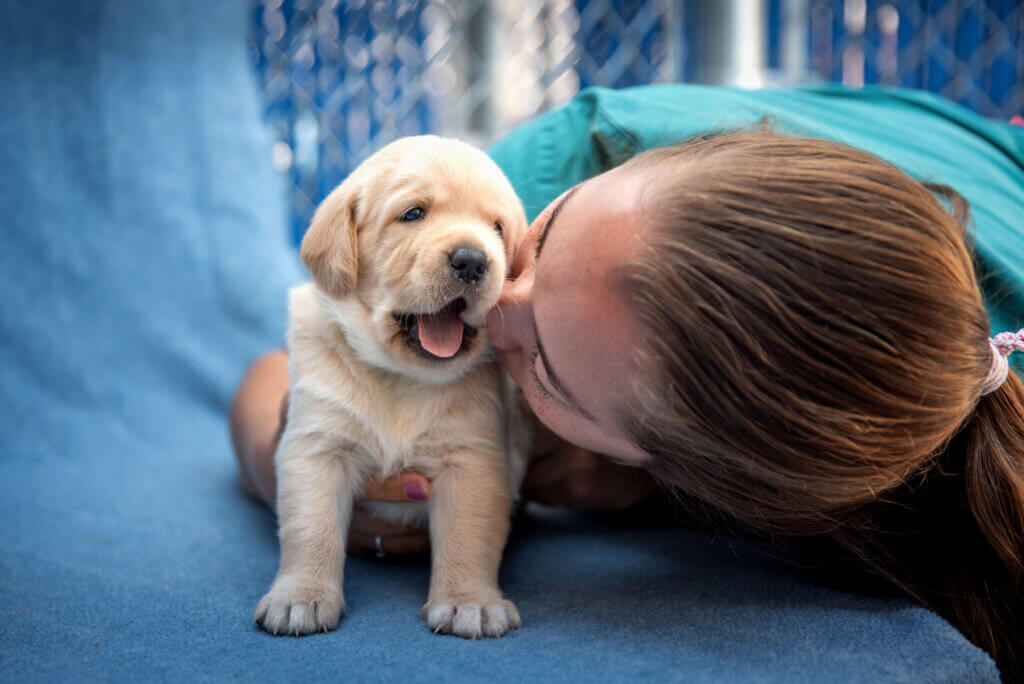
The majority of our puppies are born onsite in the FSD nursery, where they spend the first eight weeks of life receiving around the clock care and important socialization from FSD staff and volunteers.
Once they’ve completed their health and behavioral evaluations, the puppies leave the nursery and set off for their next stage of training, either with one of our volunteer puppy raisers who is specially trained to handle a “tiny tot” puppy or through a prison trained canine program.
About the Prison Trained Canine Programs
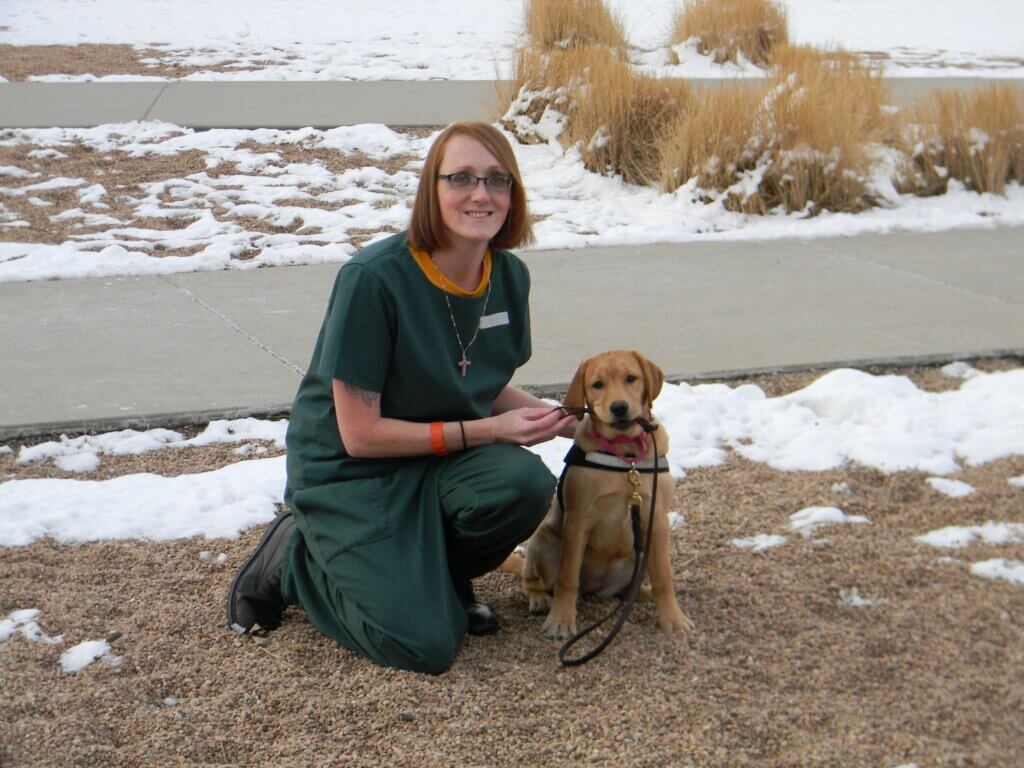
FSD puppies may be sent to one of three prison program partners, including: the Denver Women’s Correctional Facility in Denver, CO, the Sterling Men’s Correctional Facility in Sterling, CO, or the Fort Dodge Correctional Facility in Fort Dodge, IA.
Each puppy is matched with a specially selected inmate handler based on their skills and the puppy’s needs. For the next 6 to 8 weeks (or the entire 12 month program with Fort Dodge Men’s Correctional Facility’s program), the puppy lives in the correctional facility with the inmate handler, who is entirely responsible for the puppy’s care, including feeding, hydration, crate and potty training, administering medication under supervision, following a structured training curriculum using positive reinforcement methods, attending group training sessions, and providing individualized training.

As an incentive program that institutes special privileges (such as being able to go outside to let the puppy out to relieve themselves), prison trained canine programs are only offered to inmates who meet the high programmatic standards. They must be able to read, meet the utmost good behavioral criteria, have no history of abuse or violence toward animals, and are serving a longer sentence so there is continuity in training. While inmates in this program are also trained to handle pet and rescue dogs, they must become a master handler and be well-versed in positive reinforcement training methods to work with an FSD puppy, which takes over a year of progressively advancing their dog handling skills.
A Mutually Beneficial Program
Our prison partners provide essential and mutually beneficial programs that positively impact our puppies, FSD’s training program, and the inmate handlers. Through the prison trained canine programs, our puppies receive critical early training, care, and socialization during one of the most formative stages of their development and service dog careers. By the time the puppy returns to FSD to be matched with a volunteer puppy raiser, the puppy is already mostly housebroken, crate trained, socialized to dogs and people, and knows their basic cues and house manners thanks to the inmate handler’s efforts. Knowing this baseline of good behavior sets our puppies and puppy raisers up for success, which makes a profound difference in our program as a whole.
The puppies who complete the 12 month program within the Fort Dodge Men’s Correctional Facility also take a load off FSD by reducing the need for volunteer puppy raisers, which are already in high demand and short supply. Because these puppies spend almost the entire first year of their lives with their assigned inmate handler, they have incredible opportunities to build strong relationships and receive training and socialization from experienced handlers, so by the time they return to the FSD facility for formal training, they have a solid base that propels them into advanced training and potential matches with a person with disabilities faster.
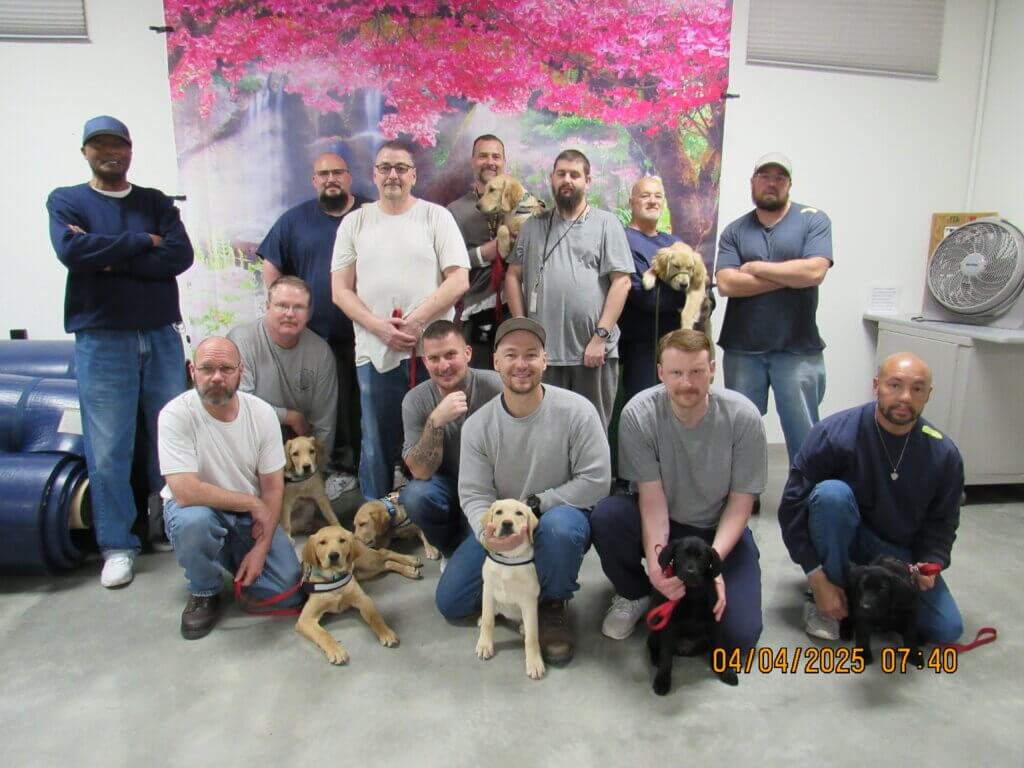
For the inmate handlers, the experience of raising an FSD puppy is often life-changing and beneficial to their mental health and well-being. Working with a service dog candidate provides structure, purpose, companionship, and something they can be proud of. It also allows the handler to give back, do something bigger than themselves, and learn life skills, which can be pivotal in their rehabilitation. One inmate handler from the Fort Dodge Correctional Facility shared:
“I want to express my gratitude for this opportunity that FSD and the donors have offered me and others here at FDCF. The dogs here have changed the atmosphere for the better. Where I once saw anger and frustrations, I now see smiles and encouragement. FSD puppy Tucker has changed my life and helped me grow as a person. He teaches me just as much as I attempt to teach him every day, so thank you for this opportunity!”
Why Your Support Matters
Prison trained canine programs with the Denver Women’s Correctional Facility and the program with the Sterling Men’s Correctional Facility are vital in FSD achieving our mission, but they come at a high cost.
In 2025, more than 75% of the nearly 120 FSD puppies born at our facility entered a prison trained canine program. Per puppy, it costs $260 a week or about $1,560 for the duration of the dog’s 6 to 8 weeks of training through the prison trained canine programs we work with in Colorado. That’s a very large expense!
As a nonprofit organization, FSD depends entirely on the generosity of our community to sustain these programs and prepare each puppy to become a life-changing assistance dog for a person living with disabilities. When you give a gift of any amount to FSD, you ensure that we can continue providing the highest quality training and care to each and every puppy in our program so that they can grow up to become an everyday game changer for someone in need.
Give today to help our puppies reach their full potential!
Want to help in another way? Join our community of volunteer puppy raisers!
Across the world, service dog organizations like FSD are facing a shortage of volunteer puppy raisers, who are critical in guiding puppies on their service dog journeys. This shortage means more puppies must enter or remain in prison programs longer, increasing our costs by thousands of dollars each year.
When you become a volunteer puppy raiser, you give a future service dog superstar the foundation they need to succeed and help offset the costs of our prison training programs. Plus, you’ll get to experience the joy of raising an adorable puppy who will one day transform someone’s life because of the time, effort, and love you pour into them.
To learn more about our PAWsome volunteer puppy raiser program, visit https://freedomservicedogs.org/volunteer/#puppyraising, email us at [email protected], or give us a call at 303-922-6231.
If this story made your tail wag, you may also enjoy:
Think You Can’t Raise a Puppy? Think Again!
The Puppy Pathway to Service Dog Success
10 Interesting Facts About Service Dogs
Published 10/16/2025

Contact Erin Conley at [email protected] for all media inquiries.