
FSD Puppy Socialization: Weeks 7 and 8

Freedom Service Dogs are confident, resilient, and hard working. But what shapes these traits? While genetics play a role, much of it comes down to how they are raised as puppies. In fact, every FSD dog’s journey begins in the nursery with specialized care and socialization to nurture their natural development and encourage the qualities we seek in assistance dogs.
During weeks 7 and 8, FSD puppies transition to a more structured socialization phase to help build confidence and independence. These two weeks are packed with exciting milestones that prepare them for their next chapter—the Prison Trained K-9 Companion Program or placement with a volunteer puppy raiser! Let’s dive into what these crucial weeks look like.
If you haven’t already read about the development and socialization of FSD puppies ages 1 to 2-weeks-old, 3 to 4-weeks-old, and 5 to 6-weeks old, we recommend starting there to follow the entire journey.
Week 7: The Art of Independence
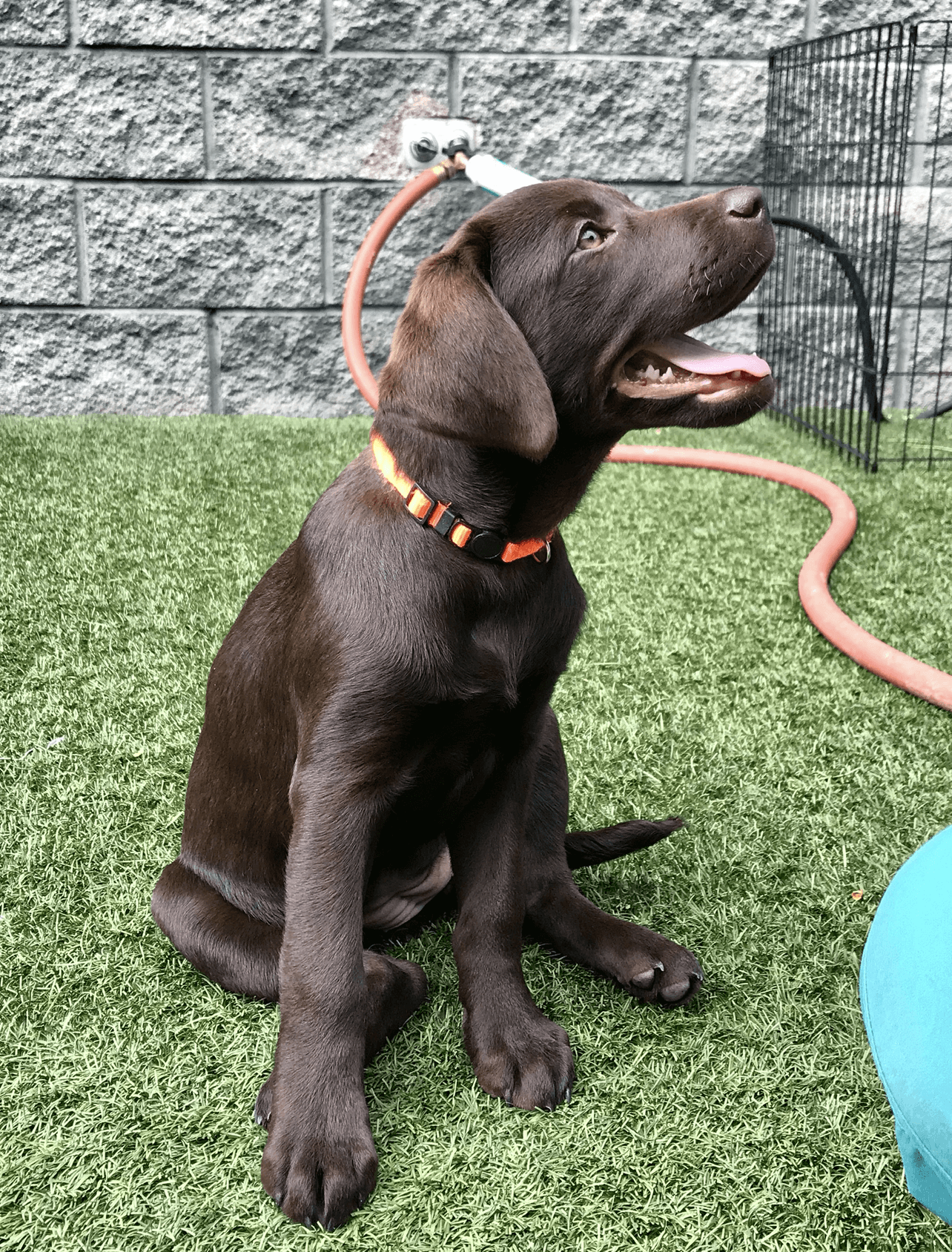
By the time puppies are 7-weeks-old, they’ve come a long way. Their sight and hearing are nearly fully developed, and skills like running, jumping, pouncing, playing, and exploring large objects are becoming more advanced. This is a critical point in their development and their inquisitive nature takes center stage. They’re soaking up the world around them like sponges, learning from their siblings, environment, and FSD staff and volunteers.
At this stage, puppies are weaned from their mother and eat solid kibble. After a job well done mothering their litters, FSD mama dogs return to their loving volunteer guardian homes to rest and recover. Meanwhile, the puppies are introduced to new challenges that build independence and confidence. They spend short periods alone in crates during meals or cleaning time, helping them adjust to being without their siblings or mother. They also get more one-on-one time with nursery staff and volunteers.
The puppies’ pods are filled with opportunities to explore and learn. For example, they can play with moving and noise-making objects or climb taller structures like puppy-sized slides. They also listen to recordings of lawn mowers, people laughing, construction noises, trains and bus stations, playgrounds, and restaurants. By creating a diverse space for the puppies to explore and associate positive interactions with, they naturally grow in confidence and curiosity.
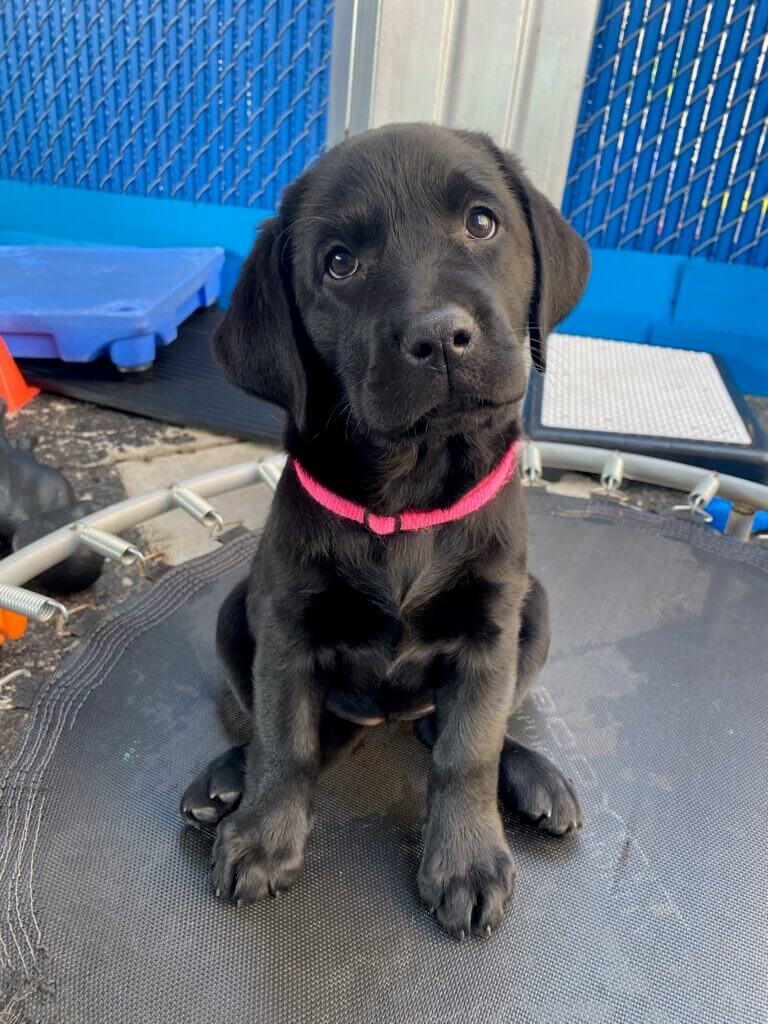
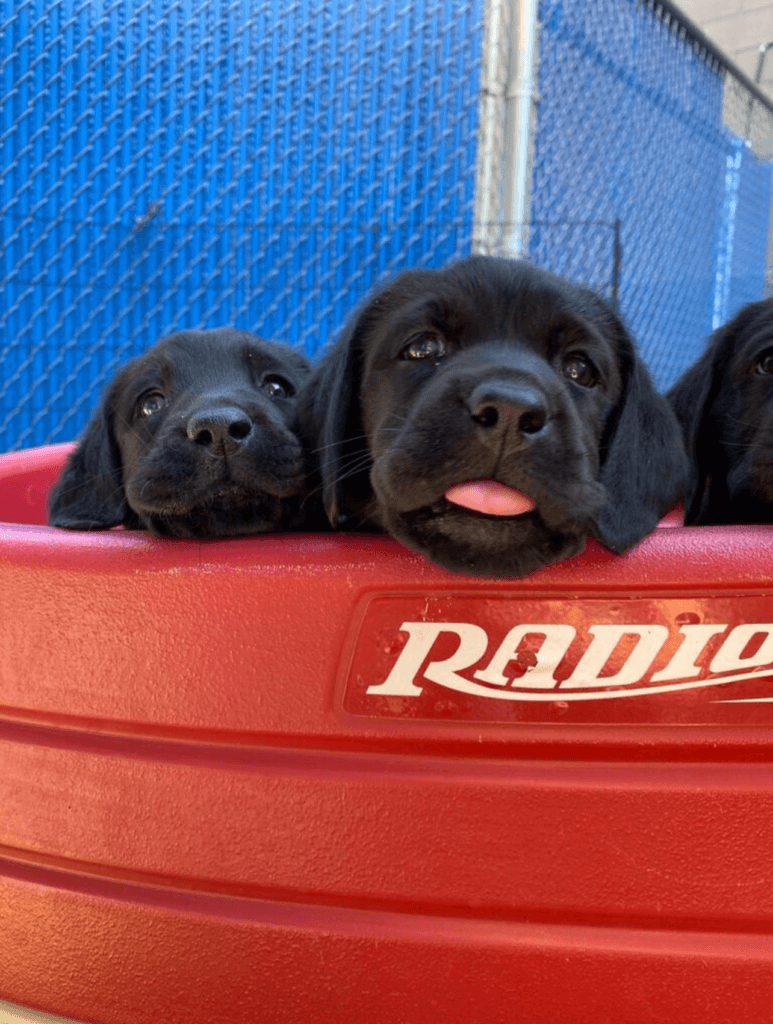
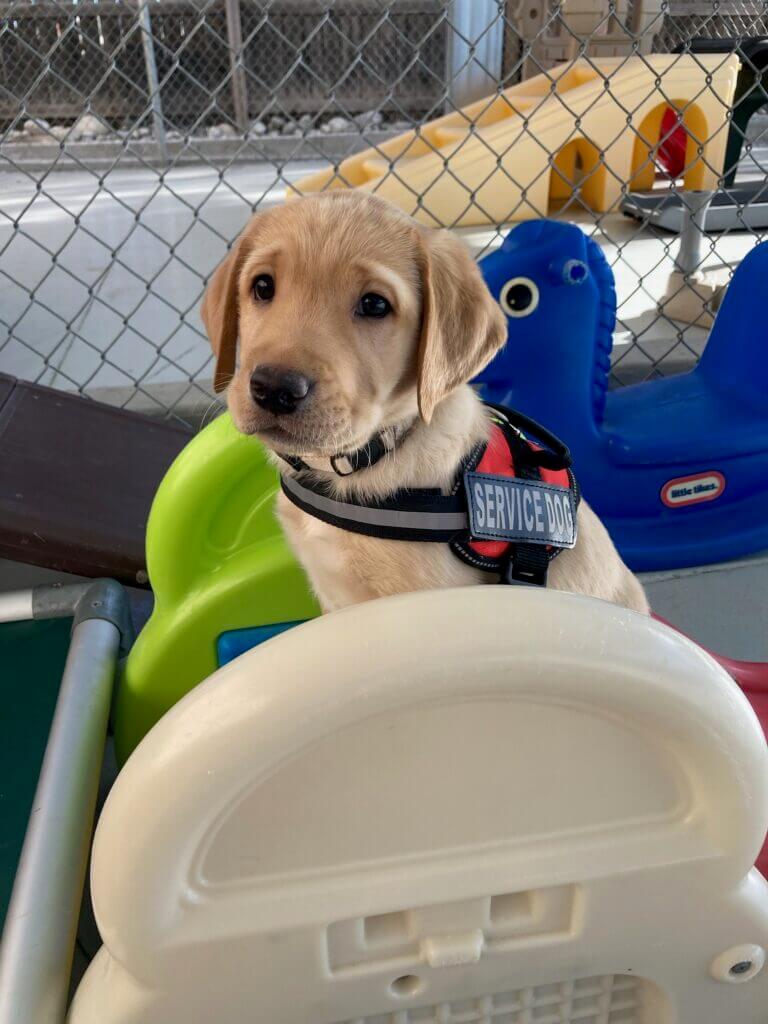
Socialization activities become more complex as well. They’re introduced to stairs for the first time, taken for individual stroller rides around the FSD campus, and experience mock vet appointments. They also receive more baths with enriching mats spread with food on it to help them build a positive association with water, bathing, and body handling.
Week 8: Preparing for the Next Chapter
By 8-weeks-old, FSD puppies with a purpose are taking the final steps toward their next chapter when they leave the nursery and take on the world. At this age, the puppies still sleep plenty between playing and learning. They’re growing stronger, more coordinated, and begin to demonstrate more distinct personality traits.
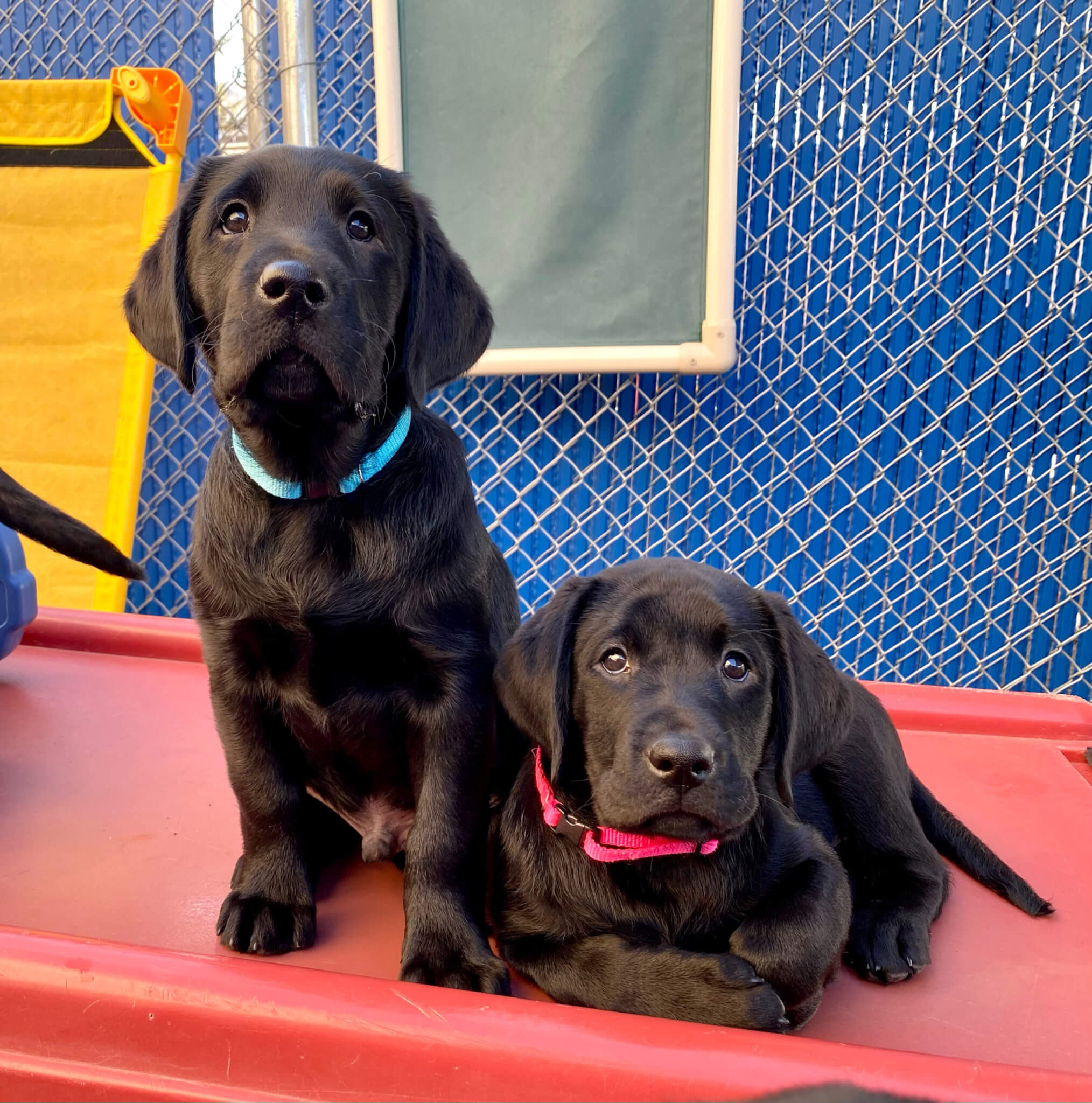
During this time, FSD puppies engage in their final socialization activities in the nursery. They receive their first full bath, spend one-on-one time with staff and volunteers in the nursery kitchen, and go on group car rides around the FSD parking lot to get used to the sensation of moving vehicles. Stroller rides in the elevator, vacuums, and standing on elevated surfaces are added to their daily routines, helping them build resilience and adaptability. From time to time, music—from country to opera and metal—plays in the background, along with other human-made sounds like whistles or clicks, to ensure they’re comfortable with a variety of auditory stimuli.
Week 8 also includes their first Behavior Checklist (BCL), a scoring system that evaluates how each puppy reacts to new environments, objects, and situations. In a specially prepared room, puppies interact with objects like statues, tunnels, and umbrellas. They are encouraged to walk on unusual surfaces, listen to a loud fan, and watch as a metal container of coins is dropped across the room. Puppies are dressed in a tiny service dog vest, put on an elevated surface, and an instructor does a series of body handling exercises with them. Throughout the BCL, expert staff members observe and record the puppy’s responses, helping determine their temperament and potential fit for service work. A similar assessment is repeated at 6, 10, and 12-months-old to track their progress and identify their strengths and areas of improvement moving forward.
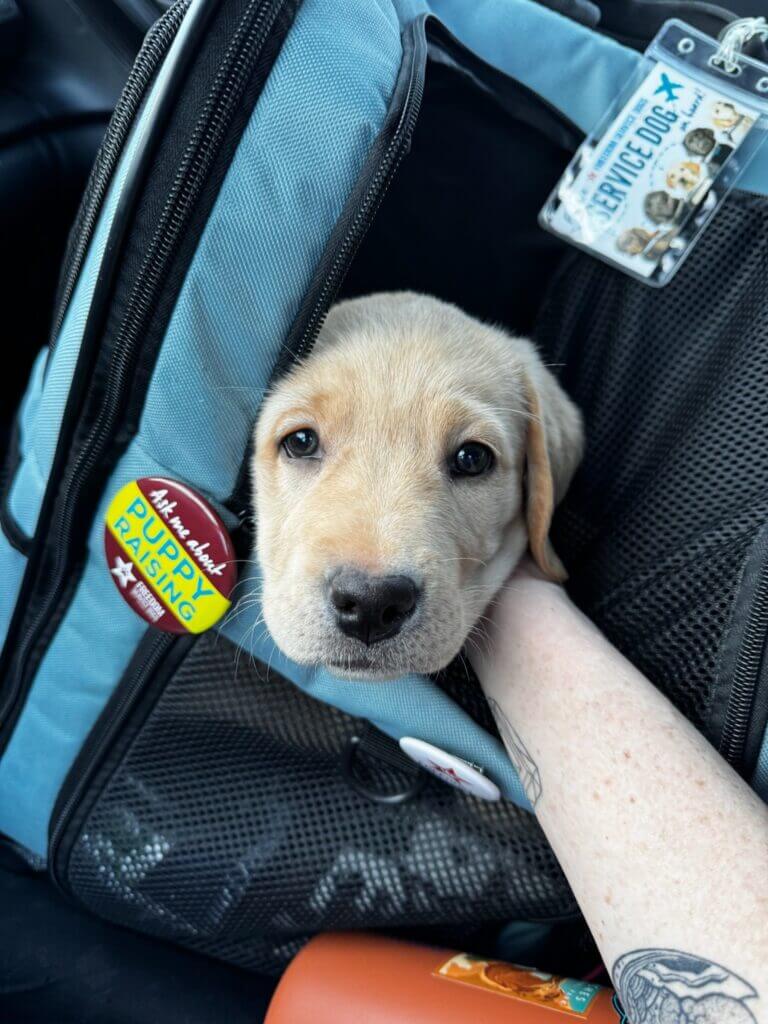
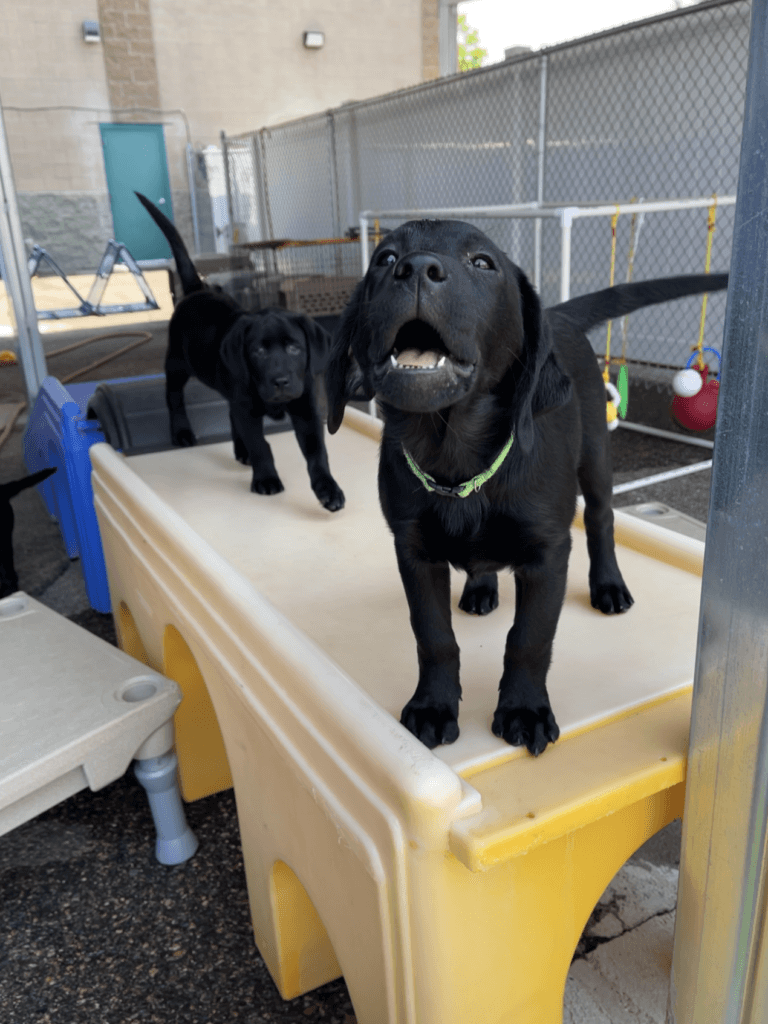
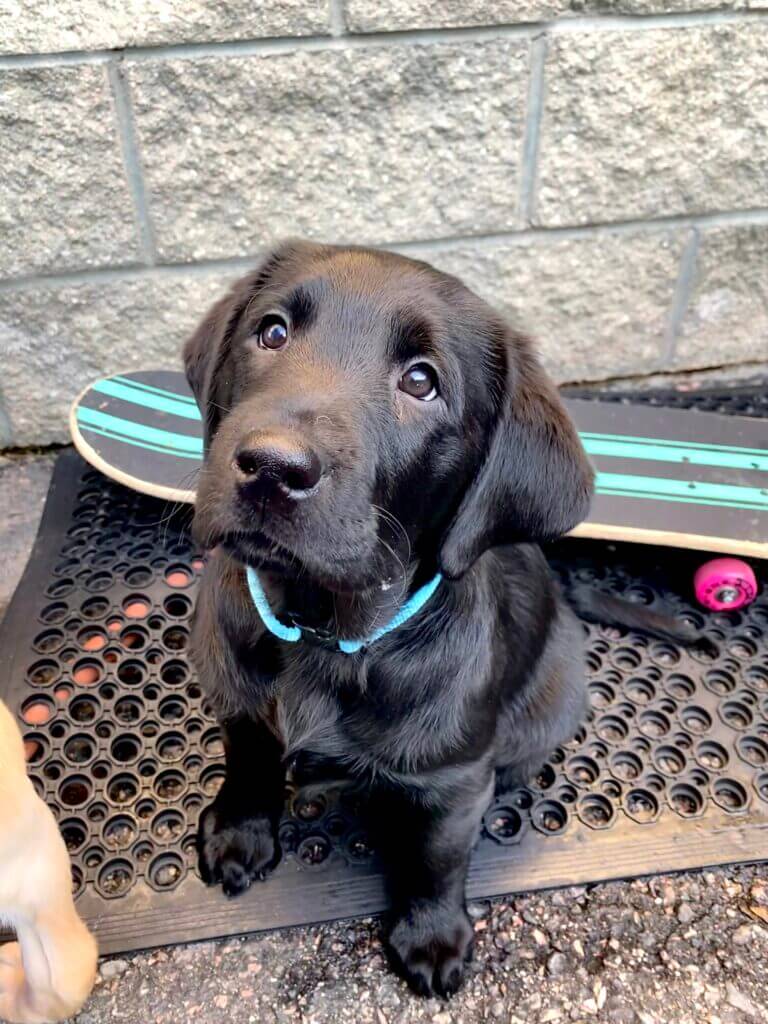
By the end of the week, with their BCL complete and a final vet check, the puppies are ready to graduate from the nursery. Most head to the Prison Trained K-9 Companion Program at the Colorado Women’s Correctional Facility or Sterling Correctional Facility, where inmate handlers teach and reinforce house manners and basic cues. Others may be placed with experienced puppy raisers.
As you can see, from birth to 8-weeks, FSD puppies go through an incredible transformation. Each stage of socialization and development is essential in shaping them into confident, adaptable potential future assistance dogs. These first weeks lay the foundation for the life-changing work they’ll do one day.
Interested in raising a future Freedom Service Dog superstar? Contact Anna Pardikes at [email protected] or call 303-922-6231 x227 for more information.
If this story made your tail wag, you may also like:

Contact Erin Conley at [email protected] for all media inquiries.